Learn how to excel at leadership and management
Sign up for our newsletter and get access to a broad range of training information and materials which will help to improve your business processes and career prospects.

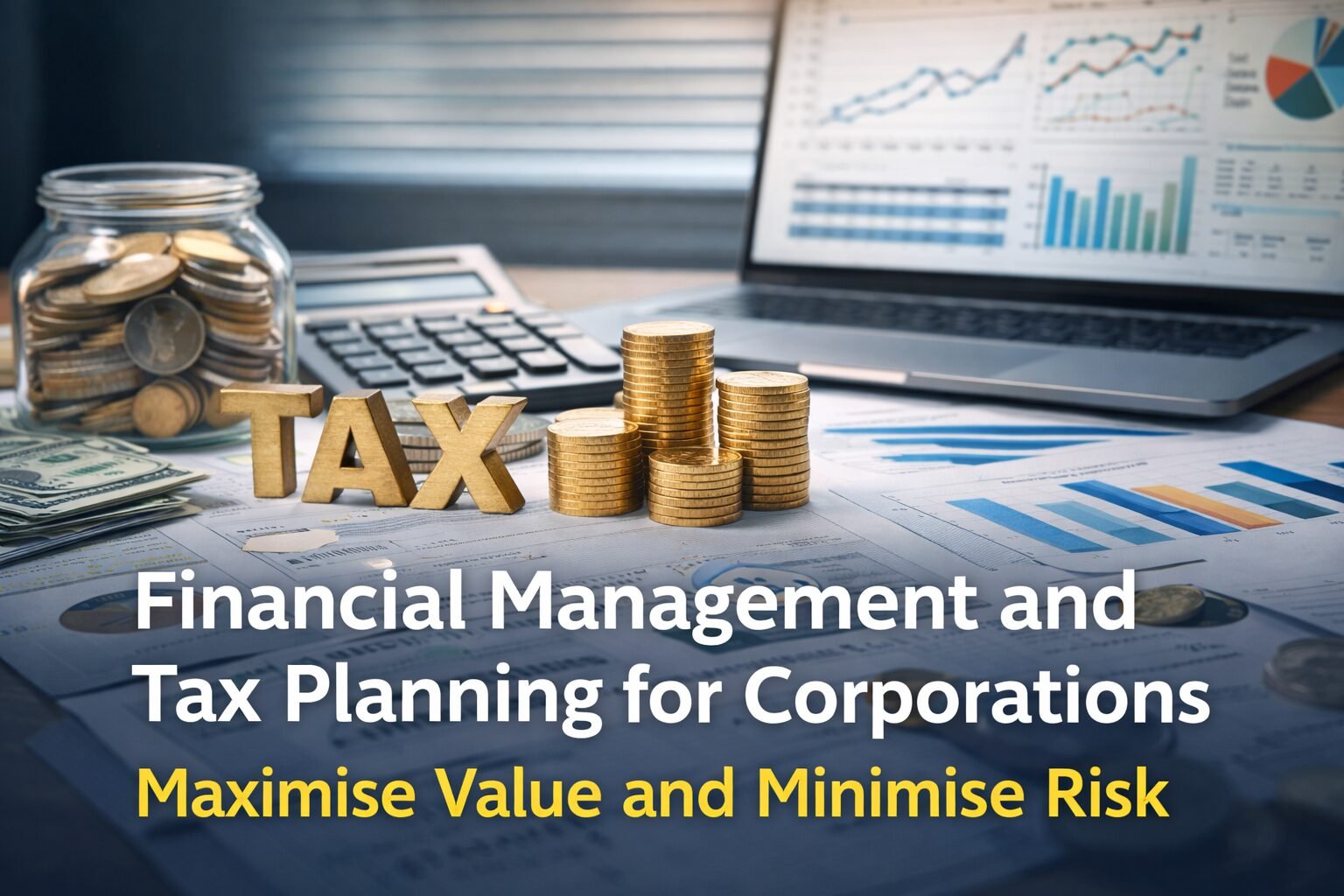
Many corporations generate strong revenues, expand their market presence, and employ skilled financial teams—yet still experience cash flow pressures, unexpected tax liabilities, or compliance risks.
Leaders often ask:
Why are we working hard, growing steadily, yet not maximising value or controlling financial risk effectively?
At MakeWay Global, we frequently observe that the issue is not revenue generation. The real challenge lies in the absence of strategic Financial Management and Tax Planning for Corporations.
Without an integrated approach, organisations leave value on the table and expose themselves to avoidable financial risk.
On paper, financial results may appear positive. However, underlying weaknesses often exist:
These issues rarely emerge suddenly. They develop gradually when financial management is operational rather than strategic. Strong revenue alone does not guarantee sustainable corporate financial performance.
A common barrier to maximising value is misalignment between financial management and organisational strategy.
When finance functions operate separately from strategic planning, corporations may experience:
Effective Corporate Financial Management ensures that budgeting, forecasting, investment decisions, and tax strategies directly support long-term business objectives.
Financial discipline should drive growth—not restrict it.
Cash flow remains one of the most critical indicators of financial health.
Even profitable corporations can struggle if:
Proactive cash flow management provides stability, supports investment, and reduces reliance on emergency financing. It transforms finance from a reporting function into a strategic enabler.
Many corporations treat taxation as an annual compliance requirement rather than an ongoing strategic activity.
Reactive tax management often leads to:
Strategic Tax Planning for Corporations focuses on:
When tax planning is integrated into financial strategy, corporations can minimise liabilities while maintaining ethical and regulatory standards.
Financial risk is not limited to taxation. Corporations face exposure from:
Without robust financial risk management, organisations operate with blind spots that may only become visible during crises. A structured approach to governance, internal controls, and performance monitoring significantly reduces uncertainty and strengthens resilience.
In high-performing corporations, finance teams do more than prepare reports. They:
When finance operates as a strategic partner, it enhances value creation rather than simply monitoring expenditure.
The most successful corporations do not separate financial management from tax strategy. They integrate them.
This means:
When Financial Management and Tax Planning for Corporations are integrated, organisations maximise value while minimising exposure to financial and regulatory risk.
Maximising value requires more than accurate accounting.
It requires:
Corporations that adopt this structured approach strengthen profitability, resilience, and investor confidence.
In today’s complex regulatory and economic environment, financial oversight is not optional. It is fundamental to sustainable success.
Organisations that embed strategic Financial Management, proactive Tax Planning, and robust Risk Management gain:
Maximising value while minimising risk is not achieved by chance. It is achieved through deliberate financial leadership, structured systems, and disciplined execution.
In a rapidly evolving business landscape, corporations that treat finance as a strategic asset—rather than an administrative function—position themselves for long-term competitive advantage.
Our programmes equip leaders with the skills, confidence, and insight to lead with impact and align teams with organisational goals.
📩 Email: training@makewayglobal.com
🌐 Website: www.makewayglobal.com
_____________________________________________________________________
Please click HERE to share your interest in our course
For enquiries: send us a message via our email address – training@makewayglobal.com
Also follow us on – LinkedIn |Instagram | X | Facebook