Learn how to excel at leadership and management
Sign up for our newsletter and get access to a broad range of training information and materials which will help to improve your business processes and career prospects.

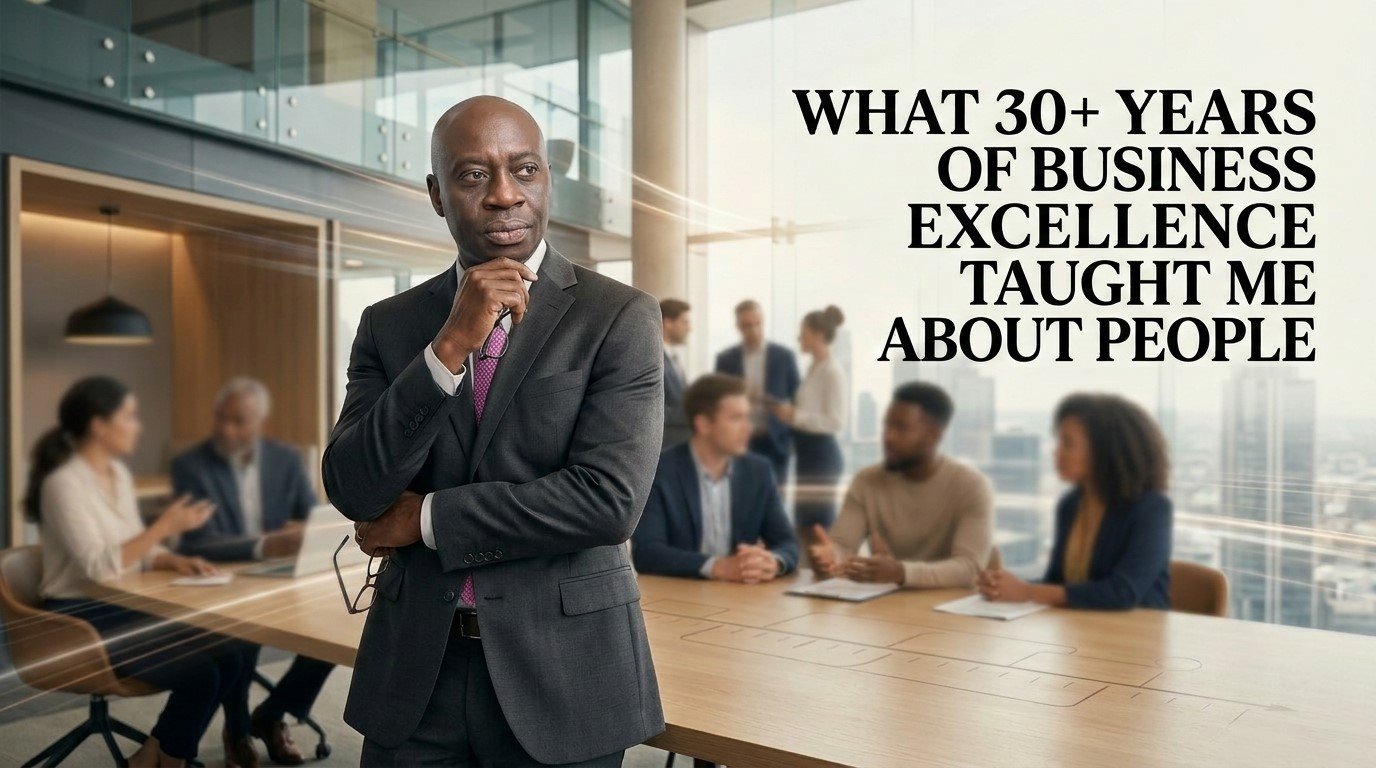
There is a mindset I have encountered repeatedly in organisations: the boss is supposed to be the brainiest person in the room. Sometimes, this is not merely an assumption made by employees. Some leaders themselves may reinforce it. The result can be surprisingly damaging!
People who were recruited because of their education, experience, intelligence, creativity and potential can gradually learn that their principal responsibility is not necessarily to think, but to do what the boss says.
Over time, a strange organisational narrative develops: ‘If you believe I am a fool, then perhaps I am better off staying a fool. Tell me exactly what you want me to do. I will do it. And if I don’t do it exactly the way you wanted, you can tell me off.’
It sounds absurd when stated so plainly. Yet I have seen enough of organisational life to recognise versions of it. And it has made me question something fundamental about the way many organisations pursue business excellence: Why do we hire people for the qualifications, experience and capabilities demonstrated on their CVs, only to put those capabilities aside once they join us because they must now simply do our bidding?
THE BRAINS WITHIN THE ORGANISATION ARE NOT RESTRICTED TO THE BOARDROOM
One of the most important lessons I have learned over more than three decades of working with organisations is that the collective knowledge, experience and intelligence of an organisation is far greater than what can possibly be represented around the executive table.
No matter how capable an executive team may be, its members cannot know everything happening across every function, process, customer interaction and operational environment. The people doing the work every day often see things that those further removed from the process cannot. They know where customers experience frustration, which processes create delays, where duplication occurs and which procedures create problems in practice.
The question is whether the organisation creates an environment in which they can say it. That is where leadership becomes critical!
FROM COMPLIANCE TO OWNERSHIP
There is a profound difference between an employee who complies with instructions and one who takes ownership.
A compliant employee may ask, ‘What exactly do you want me to do?’ An employee who has developed ownership is more likely to ask, ‘What are we trying to achieve, and how can I help us achieve it better?’
The first can give you obedience. The second can give you innovation, improvement and performance.
Of course, organisations need direction. Leaders have responsibilities, and people need clarity about what is expected of them, but direction should not become intellectual suffocation.
If people feel that their views are neither valued nor respected, many will eventually stop offering them. They may continue to perform their tasks, but stop bringing their full selves to work. The organisation still has their labour, but no longer their full intellectual contribution. That is an expensive loss!
LEADERSHIP DETERMINES WHAT PEOPLE BRING TO THE TABLE
I have learned that people will often respond to the way they are treated by their leader. If what the leader desires is personal ego, people will often provide it. They may agree in the meeting, tell the boss what they think the boss wants to hear and then say something different behind the boss’s back.
However, if the leader wants the multiplier effect that comes from having many brains working at their respective best, something different happens. People begin to contribute. They challenge ideas, identify problems, suggest alternatives, take responsibility and become more willing to experiment. They develop ownership.
The leader’s role then changes. The leader is no longer required to be the person with all the answers. The leader becomes the person who creates the conditions in which the organisation can find better answers. That is a more powerful form of leadership.
EMPOWERMENT NEEDS ALIGNMENT
Empowering people does not mean allowing everyone to pursue whatever problem happens to be in front of them. They also need to understand organisational priorities and how their work connects with what happens elsewhere. Otherwise, an employee can solve a local problem and inadvertently create a bigger problem somewhere else.
The objective is not simply to release people’s intelligence. It is to align that intelligence with what matters most to the organisation. This is where leadership, strategy, process thinking and engagement come together.
TRUST CHANGES THE CONVERSATION
I have worked with leadership teams where people operated with trust and friendship. There was candour. People could speak openly and disagree without every disagreement becoming personal. It was also a happier place to work.
Culture is visible in what people feel safe to say: whether they tell the truth when it is uncomfortable, admit that something is not working, or say, ‘I think there is a better way,’ without fearing that their suggestion will be seen as a challenge to authority.
WHEN THE LEADER BECOMES THE BOTTLENECK
I once worked with an organisation where the Owner/Manager had a strong view of how things should be done. The difficulty was that, in his mind, almost everyone else was wrong, and he usually believed that he was the right one. It became increasingly difficult for the organisation to benefit from its collective intelligence because alternative views were closed down before they could be properly explored.
At one point, I remember thinking that the organisation might actually benefit from the Owner/Manager being removed from the process he was trying to improve.
It was a striking lesson for me: A leader can become such a dominant presence that the organisation’s other brains effectively switch off.
When that happens, the leader may believe that he or she is maintaining control. In reality, the organisation may be losing capability.
WHAT QUALITY CIRCLES TAUGHT ME
My experience with Quality Circles has reinforced this lesson. You only need to attend a Quality Circle Convention and see what teams are able to achieve to appreciate the potential that exists within an engaged workforce.
I remember one CEO telling me that when the idea of Quality Circles was first suggested, he thought it could never work in Europe. Yet the results he subsequently saw were, in his words, almost unbelievable.
There was innovation, significant savings, operational improvements, and importantly, an engaged workforce increasingly aligned with executive leadership.
The deeper lesson is what happens when people are given the opportunity to discover their voice and apply their intelligence to organisational problems. People who previously appeared to be simply employees carrying out instructions can become problem-solvers, innovators and contributors to strategic performance.
WE MUST ALLOW PEOPLE TO LEARN
Earlier in my career, I might have placed greater emphasis on technical ability. I still believe competence matters. But I have come to see something differently.
When people are made to feel that they can be themselves, that their contribution matters and that they are respected, they can often develop their technical ability much more quickly.
Why? Because they are working from inspiration rather than enforced duty. When someone is trusted to think, they have a reason to learn and improve.
If we want people to contribute, we also have to accept that they will sometimes be wrong. Leaders are wrong too. If we crucify people whenever they get something wrong, eventually they will protect themselves by saying nothing. Silence can look like agreement, but it is not necessarily agreement. Sometimes it is simply self-preservation.
A healthy organisation must distinguish between an honest mistake and negligence or deliberate disregard for standards. Good leadership knows the difference.
WHAT HAS 30+ YEARS TAUGHT ME?
If I were to reduce my experience to a few lessons, they would be these.
Finally, remain open to being surprised by people. People can change, learn and surprise you. Give them humanity and respect. Give them a chance to discover their voice. And when they are wrong, remember that we are not always right either.
THE REAL OPPORTUNITY FOR BUSINESS EXCELLENCE
The greatest untapped resource in many organisations is not another technology investment or management initiative. It is the unused intelligence of the people already inside the organisation.
Business excellence requires good systems and processes. It requires effective strategy and disciplined execution. It requires measurement, continuous improvement and strong leadership. However, all of these become more powerful when people are trusted and enabled to contribute their best.
The question for leaders, therefore, is not simply: ‘How do I get my people to do what I want?’
The better question is: ‘How do I create an organisation in which every person can contribute the best of what they have, and align that contribution with what the organisation most needs?’
That is where leadership meets employee engagement. And, in my experience, that is where sustainable excellence begins.
ABOUT KOLA OLUTIMEHIN
Kola Olutimehin (also known as getKOLA) is a Business Excellence Consultant who helps organisations achieve operational excellence through effective leadership, employee engagement, continuous improvement and organisational transformation.
If you find these reflections useful, follow Kola Olutimehin (getKOLA) for more thoughts on leadership, business excellence, organisational transformation, achievement and purposeful growth.
A QUESTION FOR YOU
What have you observed in organisations where people genuinely feel trusted, respected and able to contribute, and what difference did it make to performance?
I would be interested in your experience.
If you find these reflections useful, follow Kola Olutimehin (also known as getKOLA) for more thoughts on leadership, business excellence, organisational transformation, achievement and purposeful growth. You may also subscribe to our newsletters here, and connect with Kola via getKOLA.
Kola Olutimehin is a Business Excellence Consultant, who assists organisations in the achievement of operational excellence. He is a Director with the International Lean Six Sigma Institute (ILSSI), the David Hutchins International Quality College (DHIQC), and the Global Excellence Team (GET).
The International Lean Six Sigma Institute (ILSSI) is one of the leading international Lean Six Sigma professional and certification organisations, recognised globally. Kola’s involvement with ILSSI, DHIQC and GET reflects his continuing work in business excellence, operational excellence, quality and continuous improvement.
_____________________________________________________________________
For enquiries: send us a message HERE or via email at training@makewayglobal.com
Follow us on – LinkedIn | Instagram | X | Facebook
📩 Email: training@makewayglobal.com 🌐 Website: www.makewayglobal.com